Early Black Friday$9.99 instead of $59 · ends Mon 30 Nov, 11:59 pm ET
Get the book · $9.99
For coaches, consultants & course creators

You're one illustrated book away from being the obvious choice.

Authority, Illustrated is the process that turns what you already teach into a fully illustrated, print-ready book: every spread planned, the type set, the margins and bleed done. The kind of book clients keep on the table and point at. You don't have to draw.

Get the digital book · $9.99

Early Black Friday: $9.99 instead of $59 until Mon 30 Nov, 11:59 pm ET. Instant access, plus six bonuses.

  • 248 illustrated pages, print-ready
  • 8 named methods, built for this book
  • 19 worksheets you fill in
  • 18 short chapters
  • 6 bonuses
Tap the book to see the back ↻
Digital edition · instant downloadOptional printed edition offered after checkout
Where you are right now

You've already tried to make this with AI.

You tried the AI image tools. You asked a chatbot for “a book about my method”. Maybe you opened Canva. Here's what came back, and none of it was anything you could hand to a printer.

What you got · 1

A textbook-ish wall of words.

Forty pages that sound like everyone else's forty pages. About half of new English-language articles online are now mostly written by AI,4 and your prospects can hear it.

What you got · 2

A folder of one-off pictures.

Some of them are lovely. None of them match, none of them are formatted, and together they don't add up to anything a client could keep.

What it cost · 3

Weekends of trial and error.

Re-prompting, re-sizing, re-doing. Months can go by, and the book is still a folder on your desktop.

The experts people remember are the ones they can picture: a framework on a page they can point at, a book on the table. A link gets scrolled past. A book gets picked up.

“Why can't I just do this in my AI thing?”

An image model makes pages. It doesn't make a book.

Build a book one prompt at a time and every generation drifts. By page two, this is what you're fixing:

  • Nothing matches.Characters, colours and styles change from page to page, because every prompt starts from scratch.
  • The words break.Fonts go missing, letters garble, labels come out misspelled inside the picture, where you can't fix them.
  • No typesetting.No type scale, no hierarchy. Every page shouts at the same volume.
  • No book geometry.No margins, no gutter, no safe area, no bleed. The printer trims your words off the edge.
  • No navigation.No page numbers, no running heads, no contents page that actually works.
  • No spreads. Nothing print-ready.Pages that don't pair up across the fold, and files a printer sends straight back.
  • No argument.No framework tying the pages together, so nothing on them says you're the authority.
BeforeFive prompts, five pages, five styles. Misspelled titles, clashing type, a different character every time.
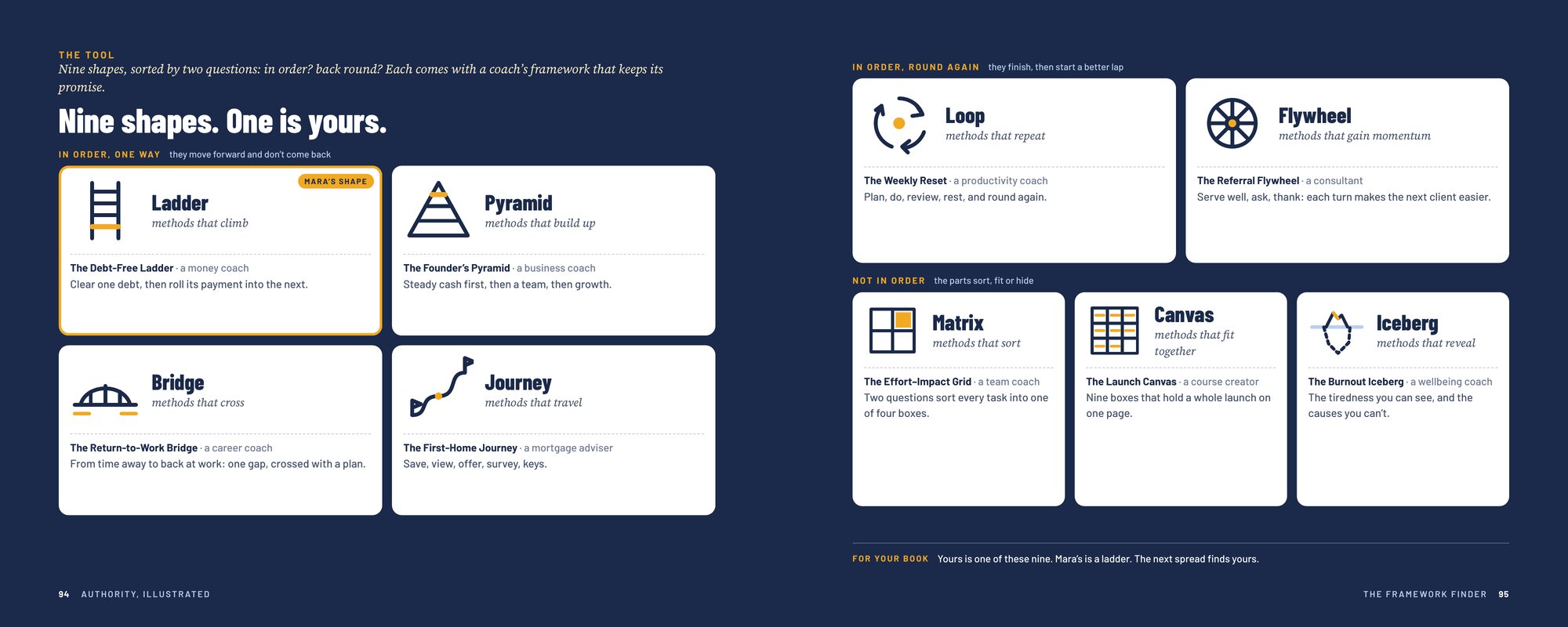
A spread from Authority, Illustrated, pages 94 and 95: one consistent look, set type and margins
AfterOne spread from the book, pages 94–95. One look, set type, real margins, a framework running through it.

What the process gives you instead

  • One look, locked before page one. Brand Cards (chapter 13), so chapter nine still matches chapter one.
  • Our own engine: the Three-Sheet Page. The art, the diagram and the words are made on three separate sheets, so every page matches, every word stays spelled right, and a fix is one word, not a redrawn page. That's why a book holds together where one-prompt pages fall apart.
  • Print specs in plain numbers. 0.125 in bleed, a 0.375 in safe area, a 0.5 in keep-out each side of the fold, 300 DPI.
  • A plan where every spread has a job. The Spread Plan (chapter 10).
  • A framework running through the whole book. The Breakdown and the Nine Shapes, so every page argues one thing: that you're the authority.
What anyone can make tonightAsk the AI for your book and you get a textbook-ish wall of words, or one-off pictures. Unformatted. No process. No framework.
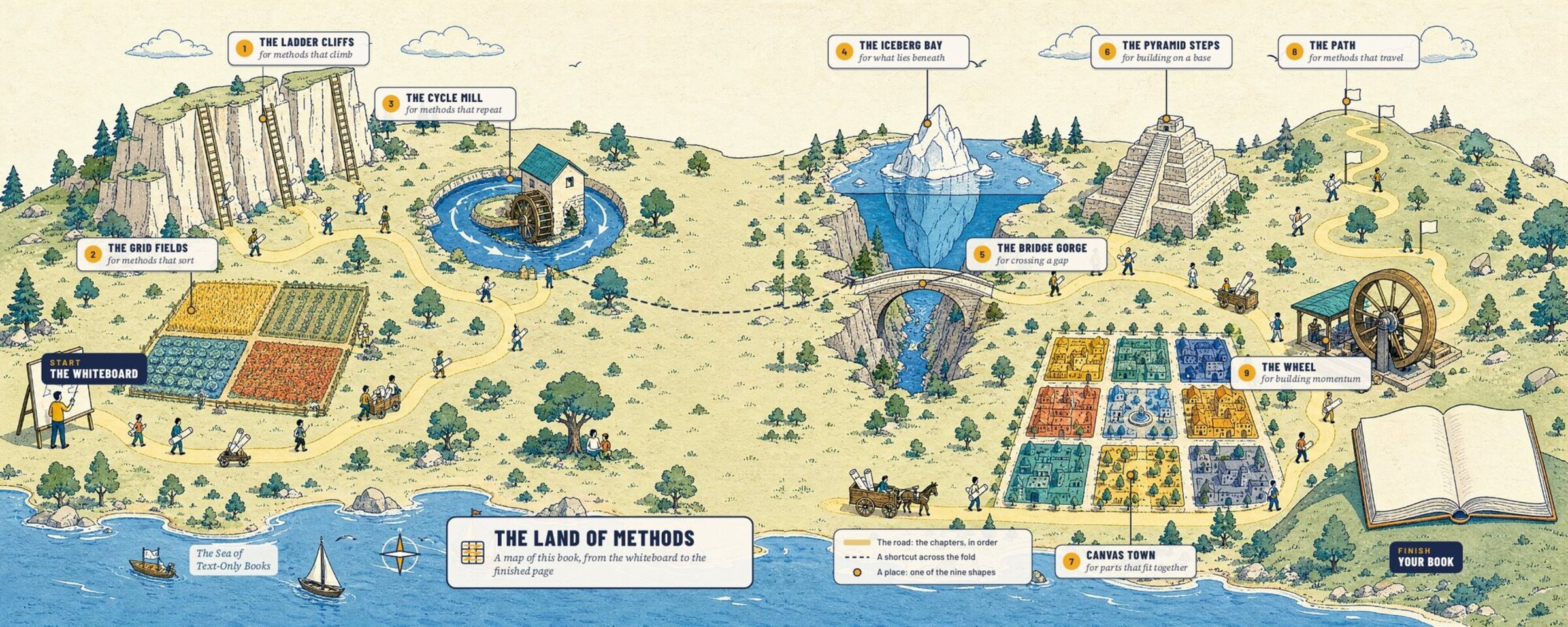
An illustrated spread from Authority, Illustrated: the Land of Methods map
What almost nobody hasA whole illustrated book, built on a process and a framework, in the format of the how-to books people keep. Your method, made visible on every spread.
Chapter 7 · The Unique Visual Mechanism

Why would anyone pick your method over the ones they already tried?

Every expert in your field says something close to what you say. What makes a reader choose you is the reason your way works when everything they tried before didn't. We call it your Unique Visual Mechanism: the engine of your method, named in five words, drawn into your framework, and seen working in three seconds. Most experts have one. Almost none have named it, let alone shown it.

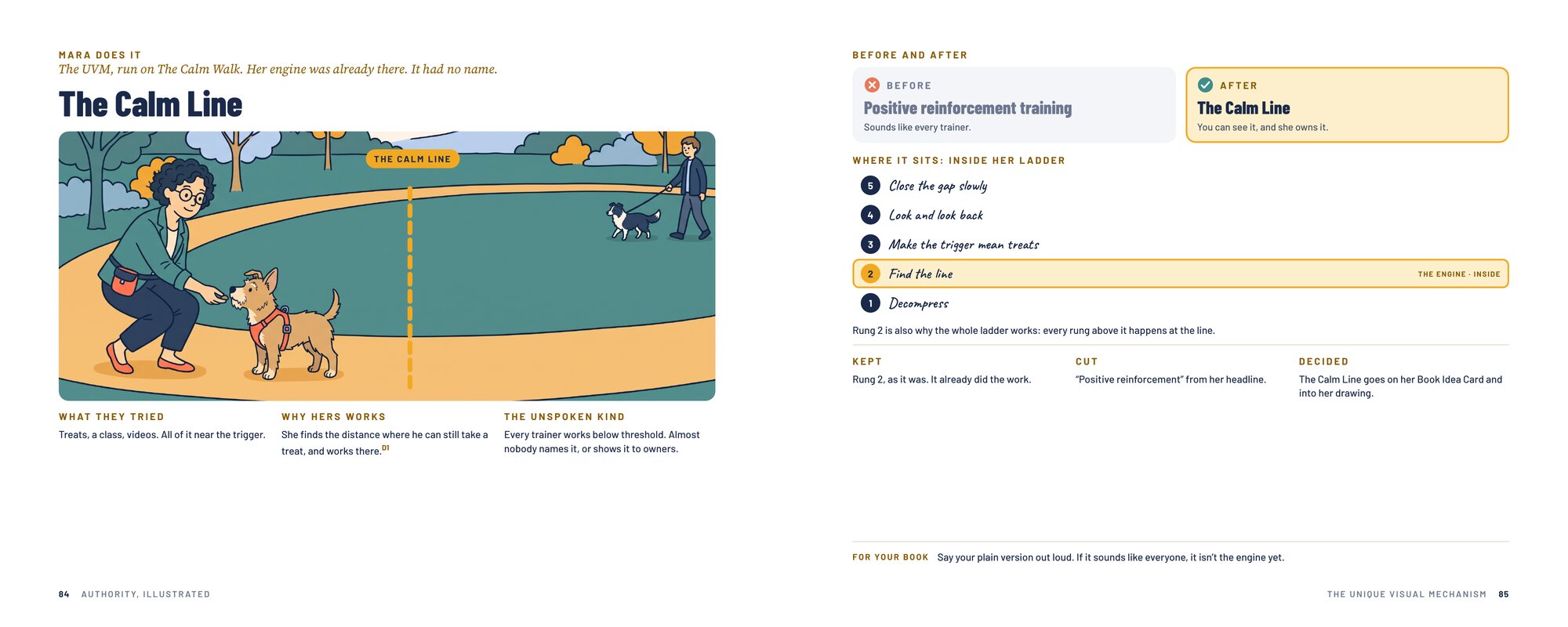
BeforePositive reinforcement trainingSounds like every trainer.
After · Mara's UVMThe Calm LineYou can see it, and she owns it.

Stop being one more expert who teaches that. Be the only one with this.

"How are you different?" is answered

For good, in five words and one picture. You never fumble that question on a call again.

Prospects arrive already sure

They've seen why it works before you speak, so the first call is about starting, not convincing.

You stop being compared on price

Anyone can sell coaching. Nobody else can sell The Calm Line. There's nothing to compare it to.

Clients sell it for you

A name and a picture travel. Clients repeat it to friends, and point at it, in your words.

One engine runs everything

Your book's hook, your course's name, your talk's key slide, your lead magnet, your posts: all built on the same idea.

It's yours

Anyone who copies the steps still points back to you: the one who named it and drew it first.

Mara's Unique Visual Mechanism, The Calm Line, drawn into her ladder: pages 84 and 85 of Authority, Illustrated
Mara does it, pages 84–85: the step every trainer uses and nobody names, named, drawn and placed on rung 2 of her ladder.

Where your engine sits

Inside it

One step of your framework is the engine. Take it out and the rest stops working.

What it produces

The thing your framework creates on the way, the one a client notices first.

Where it leads

The end goal your framework reaches, named so people can ask for it.

Three ways to find it

1The real one

Something in your method nobody else does.

A career coach's "First Rewrite".
2The unspoken one

A step everyone in your field does but nobody names. Name it, and you own it.

Mara's Calm Line.
3The renamed one

A familiar idea, given a fresh, true name and a picture.

A business coach's "Weather Window".
A new name for a real thing. Never a new claim.

Your engine has to be true in your own work. The chapter's worksheet and prompt card find it in what you already explain, in about an hour.

Chapter 7, pages 75–90 · Worksheet 7, Find your engine · Prompt Card 7

How the book works

Eight steps from what you already teach to a book with your name on it.

You don't start from a blank page. The book walks you through it in order, one step at a time, using the same format as the business books people keep on their desks. You bring what you already know. The book shows you what to do with it.

Ch. 6 · p. 61

The Breakdown

Get your whole method out of your head and onto one page, in an afternoon. Then pick the one big idea your book is built around.

Ch. 7 · p. 75

The Unique Visual Mechanism

Find the one thing that makes your method work when everything else your clients tried didn't. Give it a name and a picture, and "how are you different?" gets an answer people remember.

Ch. 8 · p. 91

The Nine Shapes

Every method fits one of nine simple shapes. If clients climb it, it's a ladder. If they go round, it's a loop. Pick yours and you know what your main picture looks like.

Ch. 9 · p. 105

The Three-Second Drawing

Make the one picture people understand at a glance, and check it on strangers before you build a whole book around it.

Ch. 10 · p. 121

The Spread Plan

Plan every page of your book in one sitting, so you know what goes where before you make anything.

Ch. 13 · p. 151

Brand Cards

Settle your colours, fonts and style before page one, so the last chapter looks like the first.

Ch. 16 · p. 191

The Attention Audit

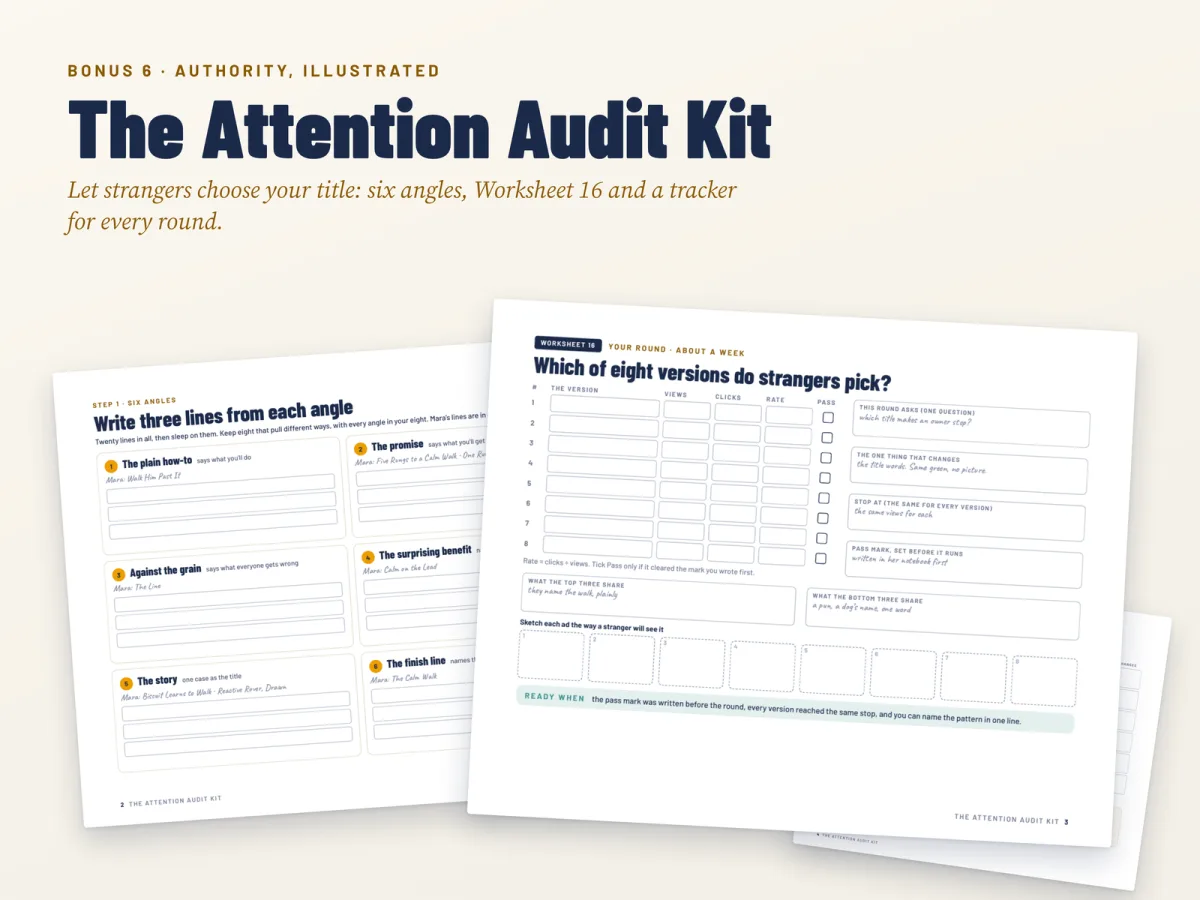
Let real people pick your best title with their clicks, before you print a single copy.

Ch. 18 · p. 215

The Five Doors

The five ways an illustrated book gets in front of new clients, so it doesn't end up in a box in your garage.

You don't just read it. Each part ends with a finished piece of your book plan, so by the end you hold all five: your Book Idea Card, Thumbnail Map, Brand Sheet, Prompt Cards and Tool Card.

Why it works

Why an illustrated book gets noticed when a wall of text doesn't.

Attention costs more, words are everywhere and people skim. Pictures with words are remembered and taught better. Here's each finding, with where it stops.

$27.66

Average cost of one Facebook lead, up 21% in a year.2 Ad prices rose 10% in a year.1

4M+

US ISBNs in 2025.3 About half of new English-language articles are mostly AI-written.4 Words alone don't set anyone apart.

20%

About how much of a web page's words get read.8 What people see at a glance is what they keep.

Pictures

are recognised more reliably than words (the picture superiority effect: Shepard, 1967; Paivio and Csapo, 1973).Limit: it shrinks when the pictures look alike.

13 of 13

comparisons favoured words with graphics over words alone (Mayer's multimedia principle, median d = 1.35).Limit: mostly one lab, short lessons.

Decoration

doesn't help: interesting but irrelevant pictures lowered learning (Harp and Mayer, 1998). So every picture in your book gets a job.

Two famous “facts” you won't find here: that the brain reads pictures thousands of times faster than words, and that nearly everything it takes in is visual. Neither has a traceable source. Chapter 4 shows what to say instead.

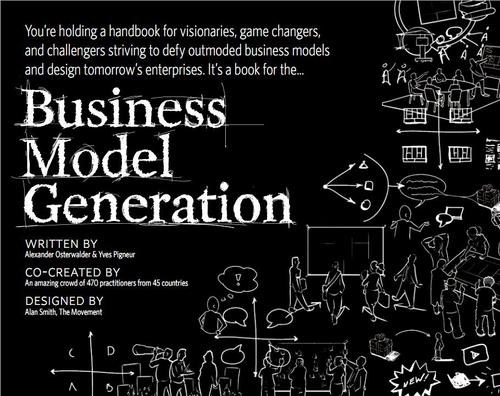
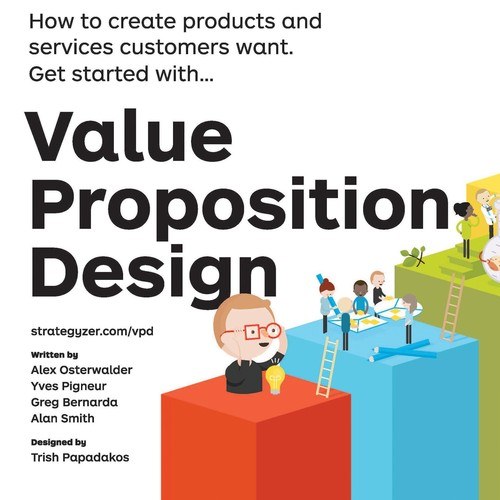
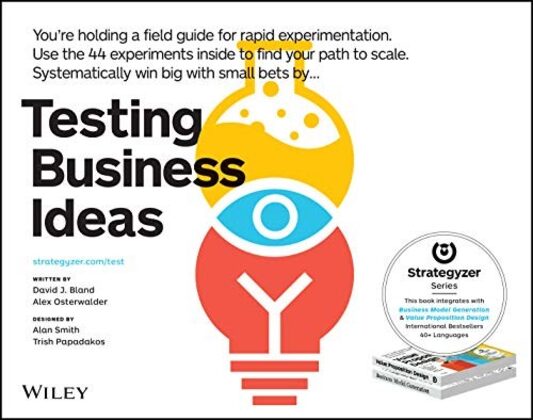
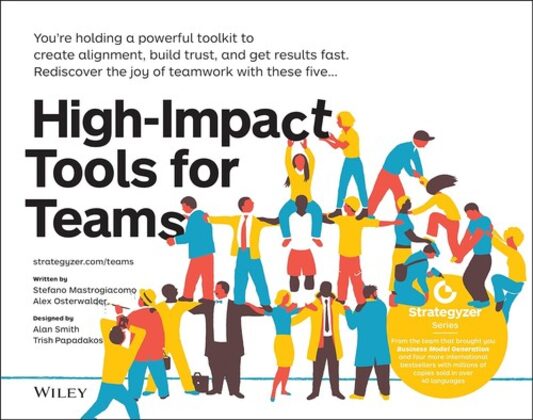
Business Model Generation Value Proposition Design Testing Business Ideas High-Impact Tools for Teams
The format already works

The how-to books people keep using are illustrated.

Business Model Generation sold 1 million copies by 2014 in 30 languages, from a book that began self-published.9 The Strategyzer series it started passed 2 million copies in 40+ languages by 2021,11 with Value Proposition Design, Testing Business Ideas, The Invincible Company and High-Impact Tools for Teams all built the same way.

Chapters 2 and 5 take this format apart, so yours can use it.

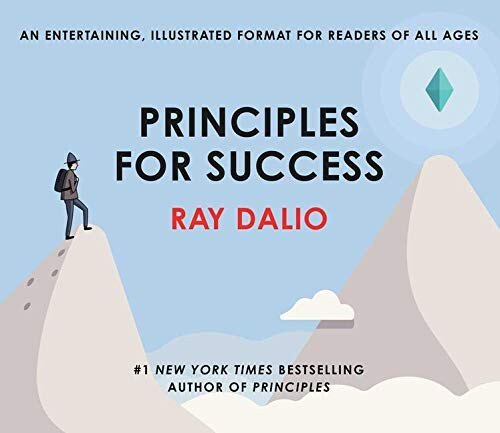
Principles for Success by Ray Dalio
Principles for Success · Ray Dalio
Steal Like an Artist
Steal Like an Artist · 1M+12
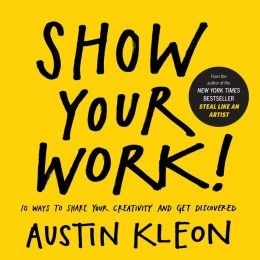
Show Your Work!
Austin Kleon's books · 2M+12
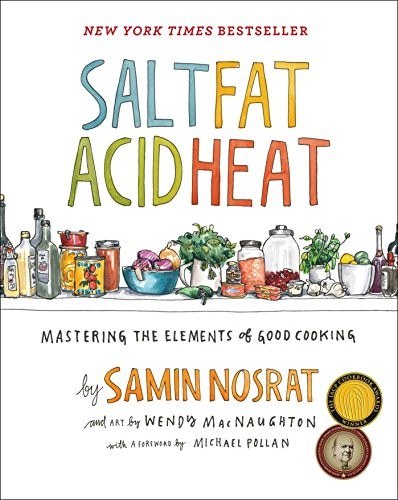
Salt Fat Acid Heat
Salt Fat Acid Heat · 1M+13
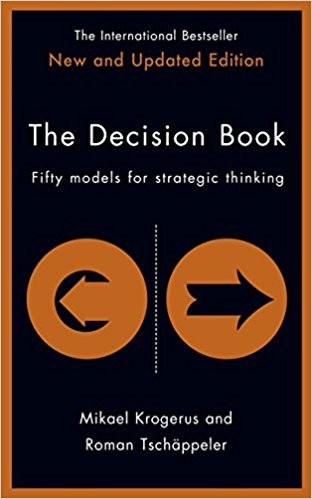
The Decision Book
The Decision Book · 500k+14
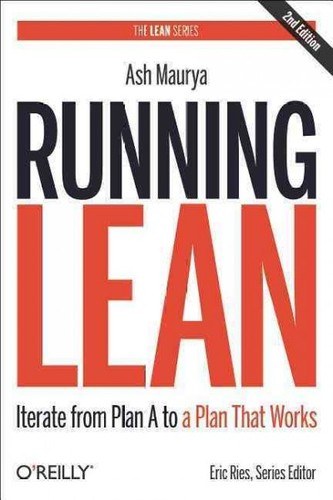
Running Lean
Running Lean · 1M+ Lean Canvas users15
Look inside

Flip through the book.

Every two-page spread is illustrated. These are finished pages straight from the book: the road map, the Land of Methods, the research, and the worksheets you fill in. Swipe, tap the arrows, or go full screen.

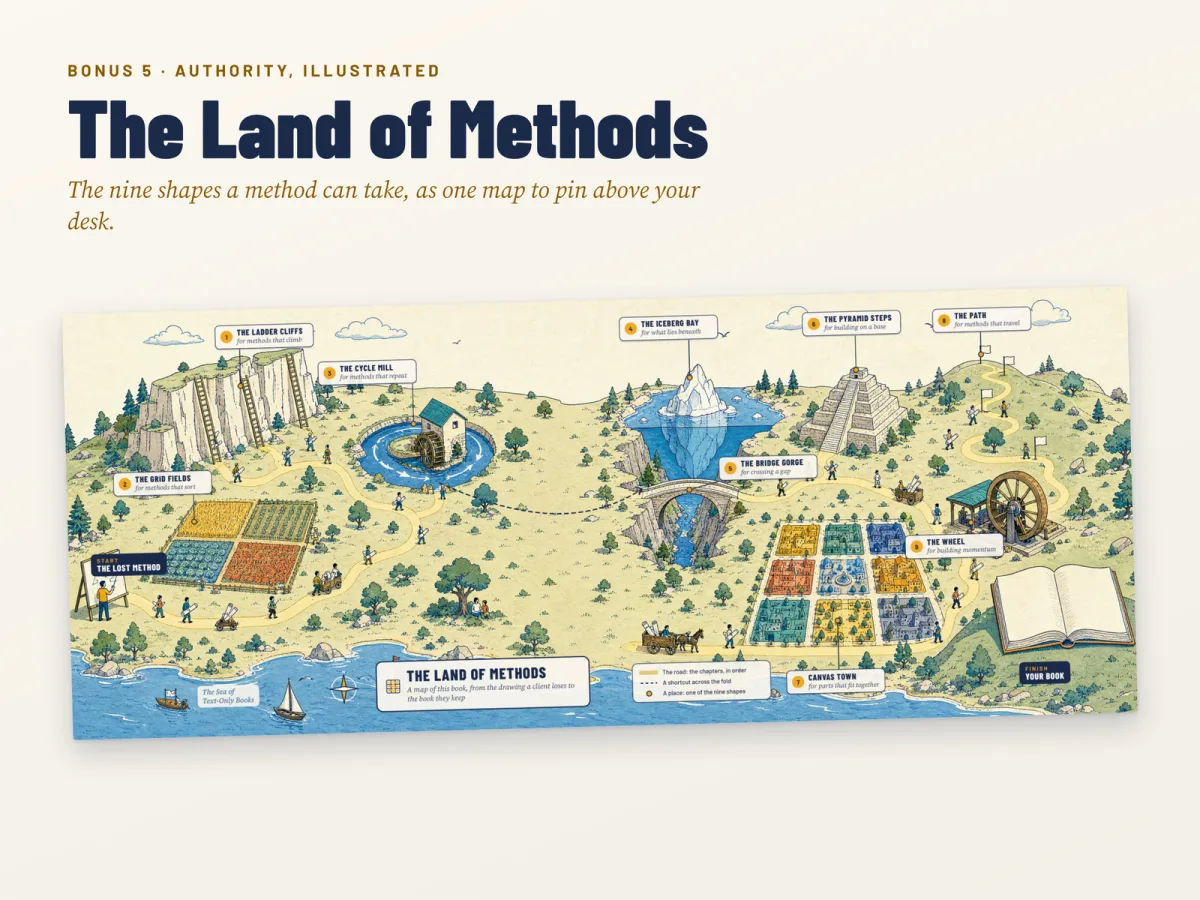
The Land of Methods

Every method fits one of nine shapes.

The book opens with a map: from the way you explain it today to your finished book, past the nine shapes a method can take. Tap a place to see what it is for. Pinch or use the buttons to zoom.

The Land of Methods: an illustrated map with nine places, one for each shape a method can take, from the first sketch to the finished book
Tap a numbered place on the map.Each one is a shape your method might already be.

The map spread from the book, pages 4 and 5.

Thirteen niches so far

Whatever you teach, it can look like this.

Every spread below was planned with the same process from the book: one of the nine shapes, a signature page, a spread plan and a set of brand cards. Tap any spread to read it.

Inside the book

Here's some of what you'll discover.

Every line is a real page in the book. Skim the highlights.

Part One · Why Drawn Books Win

  • Never get caught quoting a fake statistic. What to say instead of the “pictures are processed faster” statistic, so the first client who checks your sources finds they hold. p. 38
  • Stand out on a shelf and on a phone screen, before anyone reads a word: the one shape choice that does it. p. 45
  • Out-position “certified” and “20 years”. Why a framework a client can check, point at and argue with beats a title. p. 45

Part Two · Your Idea

  • See your whole method on one sheet, in an afternoon. The Breakdown: nine boxes, and four questions that pick the concept your book is built on. p. 61
  • Become the only one with your answer. Find the engine that makes your method work when everything else didn't, name it, and draw it, so prospects arrive already sure and stop comparing you on price. The Unique Visual Mechanism. p. 75
  • Find your method's shape in minutes. The Nine Shapes: ladder, loop, iceberg and six more, sorted by one verb. p. 91
  • Make the one page a stranger gets in three seconds. The Three-Second Drawing test, and why your favourite version often fails it. p. 105

Part Three · Your Map

  • Know what every page is for before you make one. The Spread Plan: your whole book mapped on one sheet, in one sitting. p. 121
  • Keep readers turning pages, without cliffhangers they resent. The Loop Ledger. p. 135
  • Write about a hundred words a spread, not two hundred pages. And get them from a recording of you explaining your method to a client. p. 143

Part Four · Your Look, Prompts and Tools

  • Keep chapter nine looking like chapter one. Brand Cards lock your look before page one. p. 151
  • Get finished pages from what you already make. The Three-Sheet Page: the diagram, the words and the art made separately. p. 165
  • Stop the drift and the misspellings. The Honest Toolbox: five tools, and the order that keeps your style and your words intact. p. 179

Part Five · Test It and Pocket It

  • Know which title strangers choose, before you print. The Attention Audit, and the one thing a click can never tell you. p. 191
  • Turn every page into an ad. The one rule that makes a page work on its own. p. 207
  • Get your book in front of strangers. The Five Doors. p. 215

Five finished things on your desk by the last page

ABook Idea CardCh. 9
BThumbnail MapCh. 12
CBrand SheetCh. 13
DPrompt CardsCh. 14
ETool CardCh. 15
Get the book

Your whole book, planned, for less than one Facebook lead.

Everything you need to go from what you know to a finished book plan. $9.99 until Mon 30 Nov, 11:59 pm ET.

Early Black Friday
  • Authority, Illustrated, the digital edition: 248 pages, 18 chapters, 19 worksheets, 8 named methods$59
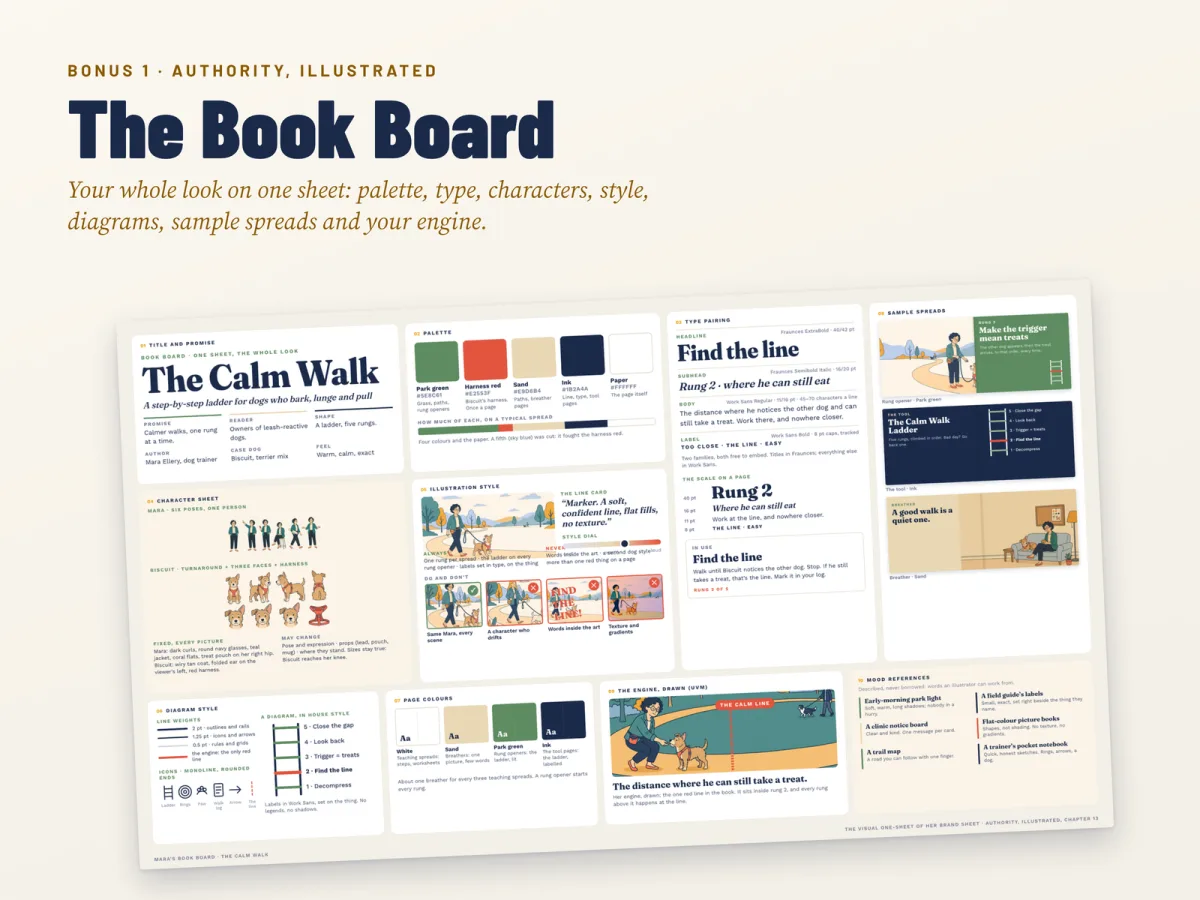
  • Bonus 1 · The Book Board. One sheet with your book's whole look: colours, fonts, character, illustration style and sample spreads. Mara's finished board as the example, plus an editable template.$47
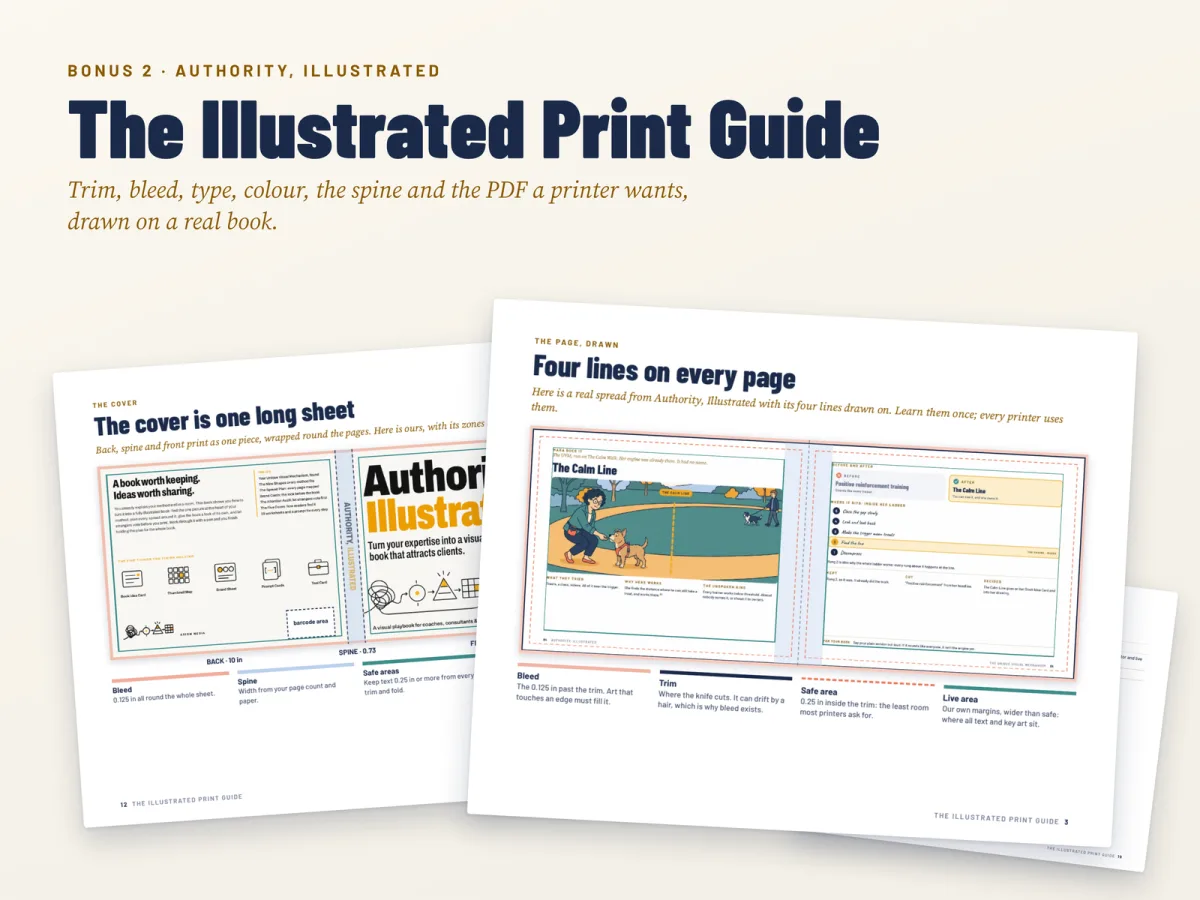
  • Bonus 2 · The Illustrated Print Guide. Margins, bleed, type, fonts and print-ready export, explained with pictures.$37
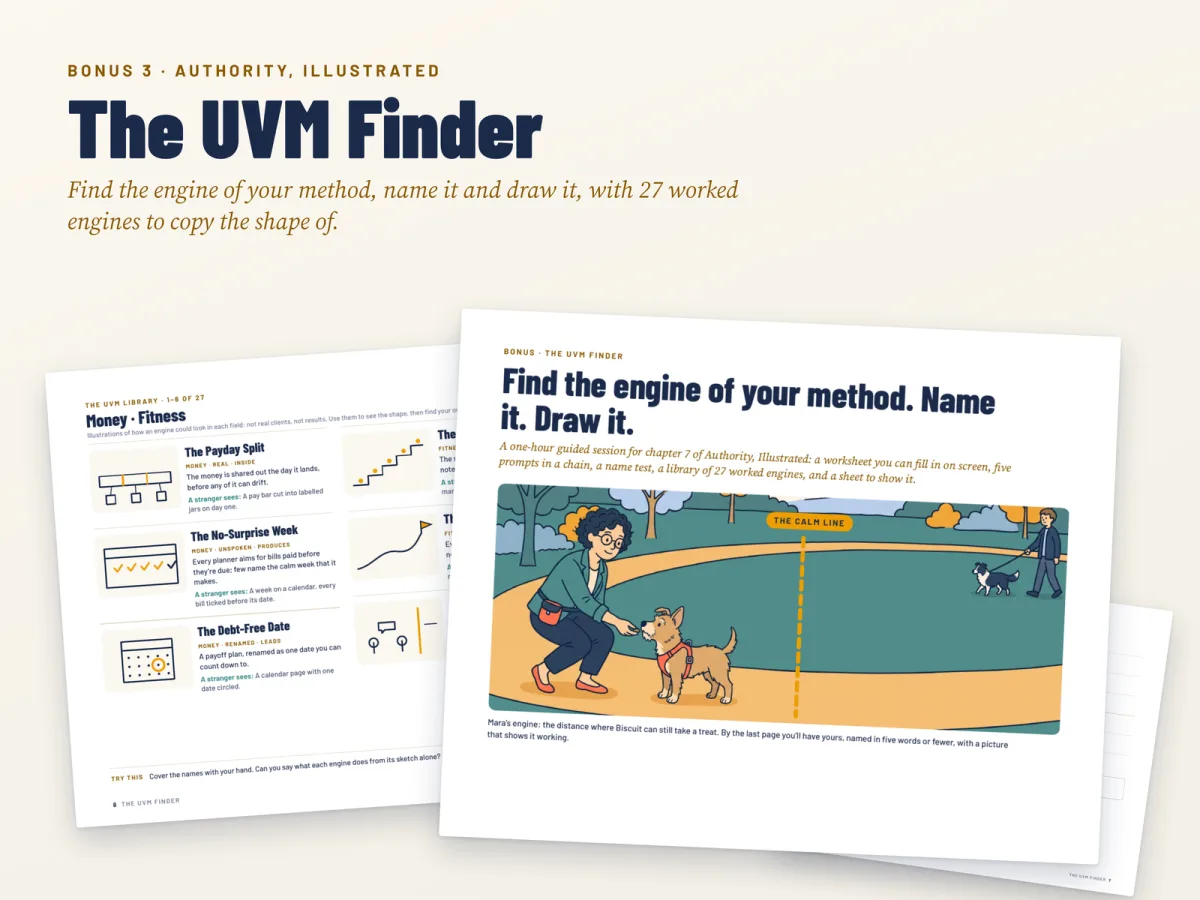
  • Bonus 3 · The UVM Finder. Find your Unique Visual Mechanism in one sitting, with 27 worked examples.$47
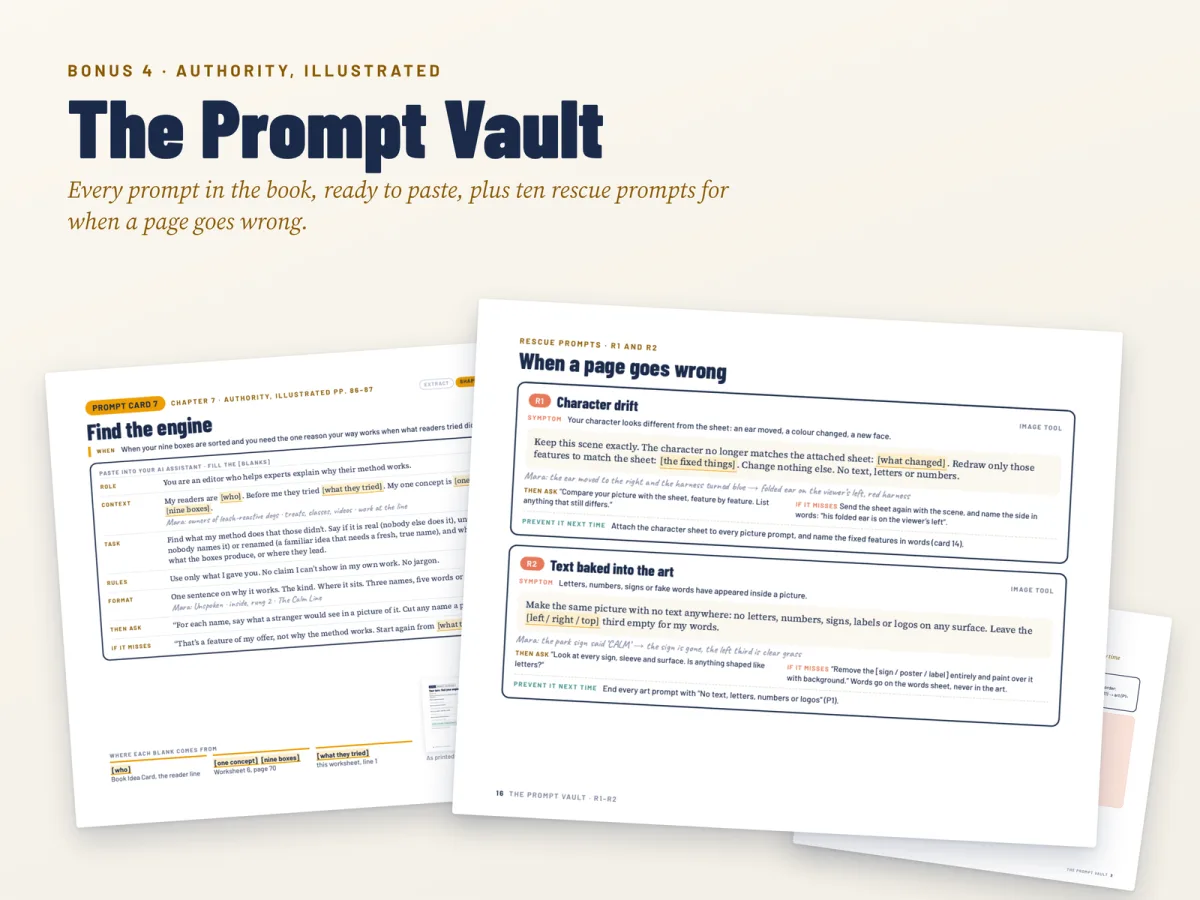
  • Bonus 4 · The Prompt Vault. Every prompt in the book, ready to paste, plus 10 rescue prompts for when the AI goes wrong.$27
  • Bonus 5 · The Land of Methods poster. The map of the nine shapes, print-ready.$12
  • Bonus 6 · The Attention Audit kit. Test your title with strangers before you print.$17
Total value$246
$59$9.99

Early Black Friday price until Mon 30 Nov, 11:59 pm ET. Then $59.

Get the digital book + 6 bonuses · $9.99

Instant access: all 248 pages download the moment you pay. Want it in print? Right after your order you can add the printed softcover ($49).

The Book Plan Guarantee

Get your book planned, or get every cent back.

Give it 30 days. If you don't come away with your method on one page, a name for what makes it work, and a plan for every page of your book, email us and we'll refund every cent. No forms, no proof, and you keep the bonuses.

Questions

The honest answers.

I already use Canva and an AI image tool. Why do I need this?

Keep them. This book turns them into tools inside a process. The Breakdown and the Nine Shapes find your framework, the Spread Plan maps the book, Brand Cards lock the look so the tools stop drifting, and the Attention Audit checks it with strangers before you print. The tools make pages. The process makes a book.

I don't have a framework yet. Is this for me?

Yes. Most experts don't. You explain what you know on calls, in modules and in messages, a little differently every time, because it has never had a name or a shape. Chapter 6 pulls the one idea out of what you already say, chapter 7 finds the engine that makes it work when nothing else did, chapter 8 gives it a shape, and chapter 9 gives it a name and one picture a stranger gets at a glance. You never have to draw it yourself.

I teach more than one method. Which one?

Start with your best one. Chapter 6, the Breakdown, shows how to pick the one concept a book should be built on. The others become chapters, or your next book: the same process works for every framework you teach.

I don't have time to write a book.

You're not writing two hundred pages. An illustrated book runs on about a hundred words a spread, and chapter 12 shows how to get them from a recording of you explaining your method to a client. Short chapters, each ending with one worksheet.

Is the whole book ready today?

Yes. All 248 pages download the moment you pay, with the six bonuses.

Why only $9.99?

It's the Early Black Friday price, until Mon 30 Nov, 11:59 pm ET. After that it's $59. No subscription.

Can I get it in print?

Yes. Right after your order you can add the printed book for $49: all 248 pages in softcover, 10 × 8 in landscape, coffee-table size.

What's the guarantee?

Get your book planned, or get every cent back. Give it 30 days. If you don't come away with your method on one page, a name for what makes it work, and a plan for every page of your book, email us and we'll refund every cent. No forms, no proof, and you keep the bonuses.

What can I add at checkout?

Two optional add-ons. The Book Blueprint Kit ($49): your book already structured, with the full spread-by-spread blueprint in three sizes, a ready prompt for every spread, editable layouts and the fill-in blueprint file. It downloads with your book. The Book Plan Poster, printed ($47): your whole book plan as a 24 × 18 in poster, printed on demand and mailed to you within 5–7 business days, with the print-ready files included. Free shipping to US addresses.

Who's behind it?

The book studio at Axiom Media, which publishes Authority, Illustrated.

Everyone in your niche has a course, a podcast and a PDF.

Be the one with the illustrated book.

The illustrated book on your subject: the one clients keep on the table, point at and pass on, with your name on the cover.

Get the digital book · $9.99

P.S. The Early Black Friday price ends Mon 30 Nov, 11:59 pm ET. After that, it's $59.

P.P.S. Not sure yet? Tap the nine places on the Land of Methods map. If you recognise your method in one of them, you've already taken the first step.